Showing posts with label linux vs. windows. Show all posts

Tuesday, January 8, 2013

A nice Windows hack: Substitute the bash shell to replace CMD

Going back to the Windows command line is always a painful experience. The pain is only magnified if you're used to using a unix shell, like bash. Luckily, relief is available via a free download and a Windows registry hack.

First, you'll need a replacement shell. There are a few available. I tested two.

  • Win-Bash This is a very lightweight tool. It only requires 13M of disk space and there are about 120 files with many standard utilities included. This setup ended up being much more capable than I had originally thought. Even though the bash version offered is several years old, it may be enough to meet your needs. Personally, I opted for a more comprehensive solution, below...
  • cygwin This is a large set of unix/linux applications that have been ported to the Windows environment. It can be installed piecemeal, and the base environment includes several shell options, including bash. The downside is that the basic install requires about 100M of disk space.

To add a final piece to the puzzle, and make executing the shell much more convenient, you'll need to tweak the Windows workstation a little bit. After installing the bash-capable environment of your choice, the next step is to create a batch file and tweak some registry settings. When these fixes are in place, it will enable you to invoke bash using the standard right-click menu context.

Create a startup batch file, my_bash.bat

@echo off
cd /D "%1"
SHELL=c:\cygwin\bin\bash.exe
PATH=c:\cygwin\bin;%PATH%
bash -i

Navigate to the proper position into the registry (caution! whenever fiddling with the registry!) using the registry editing tool of your choice:

\My Computer\HKEY_LOCAL_MACHINE\SOFTWARE\Classes\Folder\shell

Add a new key using a descriptive name for the environment you've chosen. I installed both and chose win-bash and cygwin

Note that the value of default REG_SZ key assigns the name that will be shown in the right-click menu.

Next, add one more subkey below that new key:

\My Computer\HKEY_LOCAL_MACHINE\SOFTWARE\Classes\Folder\shell\cygwin\Command

The default REG_SZ for this subkey is the code that is executed. Link this to the batch file.


cmd /c c:\cygwin\my_bash.bat "%1"

Voila! Test it using the Windows explorer shell.

After this environment is installed other bonus factors can start to accumulate, too. You can start writing simple bash scripts to automate common Windows tasks, or not. In any case, the unix scripting language(s) offers much more robust and consistent environment(s) for getting things done. If that were not incentive enough all by itself, here are some other things that I have tested as working, too. You'll need to install more than the base layer of cygwin, though.

  • networking components. I installed ssh with heimdahl kerberos. That enables ssh sessions to be authenticated by active directory, i.e. without entering a passowrd.
  • gnu compiler tools. Now, you can compile your standard C/C++ code that will execute under Windows without having the Microsoft tools.
  • X11. Run remote X-applications!

As you can see, although I've only scratched the surface here, the Windows environment can be made more comfortable for those used to running Linux! Cygwin is the key.

edited: 2013-08-30, fix registry path

Tuesday, May 10, 2011

Confirmed: Microsoft buying Skype

Some early reports have Microsoft aquiring Skype for $8.5 billion.
.

If true, this continues Microsoft's pattern of buying into market segments where they have no presence. The trend started with their hotmail acquistion. Recently, they paid Nokia over $1 billion dollars to begin scrapping their Symbian cell phone OS in favor of the Windows cell phone OS. Just before that, they pressured Yahoo to "join" Bing, or die.

Skype has enjoyed success because it was a first to market service. They offered value to users for free (skype-to-skype video calling) or for low cost (skype-to-real telephone voice calls). Ebay found this business model difficult to monetize, and ended up selling it to a group of private investors for $2 billion, losing $600 million in the process. Analysts are wondering how Microsoft will recoup this new high purchase price. Comparing this sale to the last sale is a high factor: (2 billion * 4.25 = 8.5 billion). No matter how you slice it, 425% is a high scaling factor. Perhaps, the price climbed that high due to Microsoft winning a bidding war with Facebook. I saw some rumors last week that Facebook was trying to buy Skype for $4 billion. The question remains of whether a change in business model is in the offing to monetize this Skype investment. Will they begin charging for calls? That seems to be a difficult prospect in the crowded VoIP market- consumers have a lot of options, including Google Voice. Skype has had the advantage of better voice quality, and now consumers may be asked to pay for it.

First Update:
Slashdot finally picked up the story. Better late, than never. Their coverage points to some articles which question whether the new owner will have the same commitment to non-MS platforms. This change casts a serious pall over the Linux version of Skype. The pundits are predicting it will be left to wither on the vine, if not killed outright. I hope that isn't true, because I like Skype on Linux. If their strategy was to further entrench their Windows OS, then they should tread lightly. One potential unintended consequence that MS may not have anticipated is that Skype is a market leader, but hardly the only game in town. If users dump Skype, then a significant number would move to arch rival's product, google voice. A mass exodus is certainly a possibility if/when MS tries to change the rules by upping calling rates, and/or dropping support for other platforms. GV alreadly offers some attractive features. The only thing holding it back is its less than stellar call quality. If its implementation was slightly better, then it could compete easily with Skype. GV has one very nice feature: it offers to assign a "real" phone number. That real phone number can act as a gatekeeper for the myriad of numbers that people are likely to have (home phone, cell phone, office phone, etc.) Google's recommendation is to publicize your GV number, and then it will automatically forward incoming calls appropriately. It "finds the person," and just works with whatever device the user is currently using (real telephone, cell phone, computer, etc.).

Update: 2011-05-13
Some people (Brooks, Vaughn-Nichols) think $8.5 billion is a high price, especially since Microsoft is supposed to be able to write their own software. Apple rolled out FaceTime with no trouble. The linked articles question whether Microsoft's primary motivation for buying Skype was simply to stop other people (Facebook, Google) from owning it, and maybe, possibly doing something with it. Like I said, 4.25 times the last sale price is so high, it's beyond the moon.

Update: 2011-05-25
Slashdot reported yesterday that the cuts to other platforms have begun. They cited that Asterisk support for the open source software/hardware platform for building PBX is first on the chopping block.

Sunday, January 2, 2011

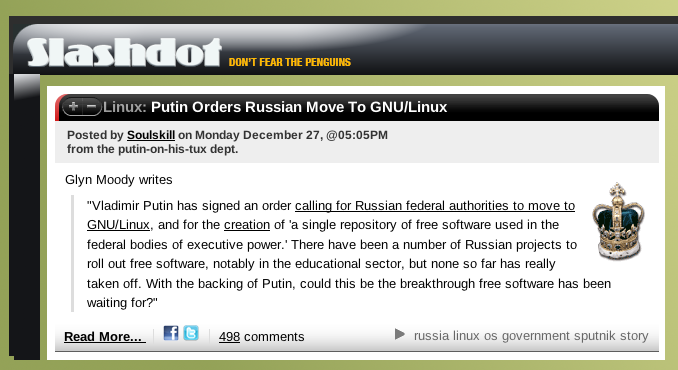
Russian Government Mandates GNU/Linux

Russia is the latest government to initiate the switch to GNU/Linux. They follow after China and Cuba. There have been other governmental mandates which have had varied success and staying power. Here is Slashdot's
headline.

There needs to be some commitment to stick with it because there can be some pain during the transition period. Users may push back when pushed away from their comfort zone. They are more likely to stick with it if they know there is a payoff in the end. For example, they could have the incentive of keeping their jobs because they know their salaries are in part paid for by capturing the Microsoft tax. Some of the cynical comments on the Slashdot posting also hit the nail on the head. They guessed that Vladimir Putin could be posturing for a big discount from Microsoft by just threatening to move to GNU/Linux. That could certainly be true, and the monopolist is likely to comply with a cost incentive. However, if Russia doesn't follow through, it will be too bad. GNU/Linux is certainly very usable as a desktop and server OS at this point, not to mention its resounding success and acceptance on Android devices. Big government backing could be the final piece of the puzzle to break the monopolist's agenda to maintain its predatory price structure.

Tuesday, November 23, 2010

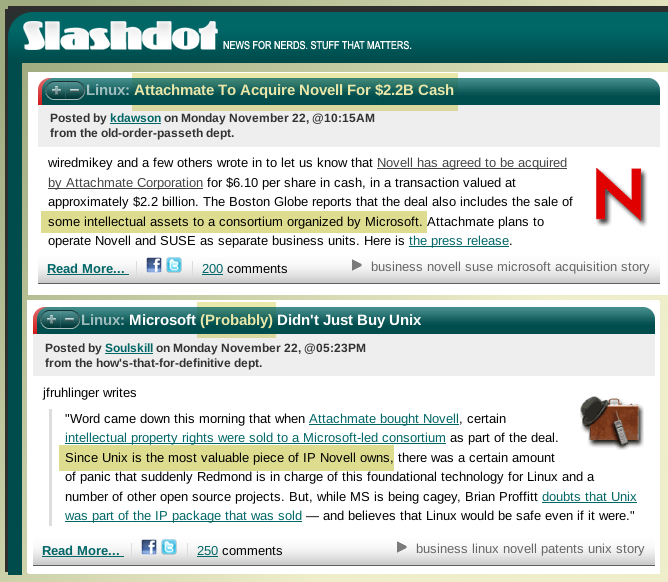
Novell's management dumps company

Yesterday, Novell's management found the buyer they have been looking for. Good luck to Hovespin and the rest of Novell's ex-management team. Now that they've put this computer BS behind them they can get into that really profitable business they've always dreamed of. Look for them to be selling Florida timeshares. Then again, they may be content to take it easy and lay of the beach for the rest of their lives. Afterall, they could be set for life and retire. It's a sure bet that management will get a big slice of the $2.2B sale price and the $450M from Microsoft.

This looks like Novell's final white flag. It looks like they flat out gave up and surrendered because they were unable to compete. Too bad their imagination is so limited. RedHat and IBM continue to see free software/open source software as a vehicle to drive sales of services. Let's see if new management can do something with Suse, or if it withers and dies. It's hard to say, because customer relationships are very important. If it is rough transition, then it could be a windfall for RedHat as Suse's enterprise customers exit in droves. It definitely looks like Attachmate could have overpaid, especially considering the big spoonful of bad will that spiked the deal at the end. Whatever good will was leftover from Novell's benevolent actions in SCO vs. "world" lawsuits has just evaporated.

.

Sunday, October 24, 2010

DIY: Add kerberos support to Slackware 13.1

I created this webpage to document a project I have been working on. I also posted for comments to aols here.

Sunday, October 17, 2010

Misc. Usenet Post

I wrote this general advice in comp.os.linux.setup

Update: 2010-10-18
This is another separate thread with some more general advice to a potential new GNU/Linux user,
comp.os.linux.misc

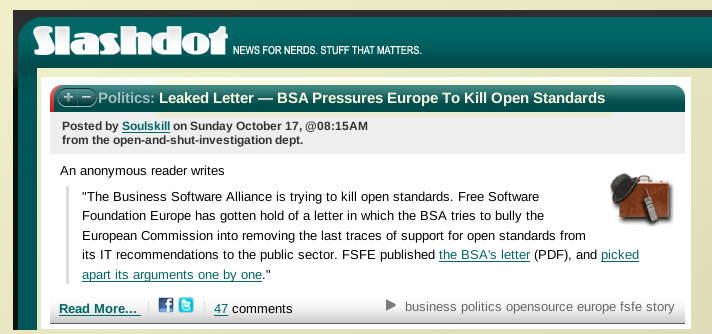
BSA to EU : Kill Open Standards

This again is remincient of the "Knife the baby" tactics which Microsoft (now puppet BSA) are so very famous for.

Here is Slashdot's
headline


Here are the fsfe's arguments against BSA

Tuesday, September 28, 2010

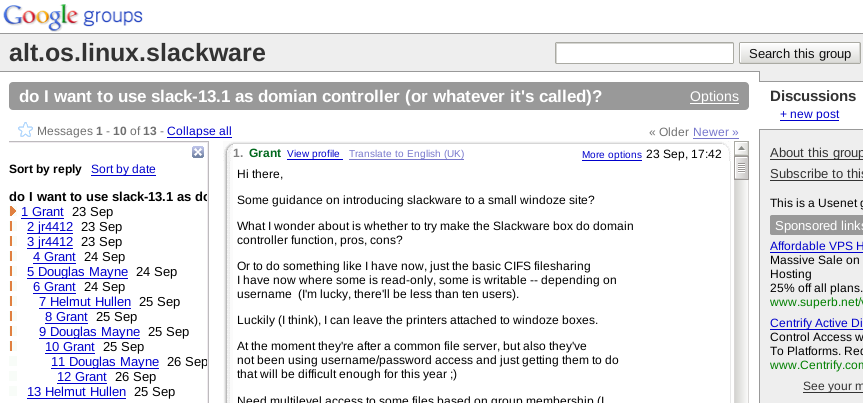
Slackware role in mostly Windows environment

Here is an interesting usenet thread that I participated in recently.
.

Friday, September 17, 2010

CUPS: Printing made easy in Slackware

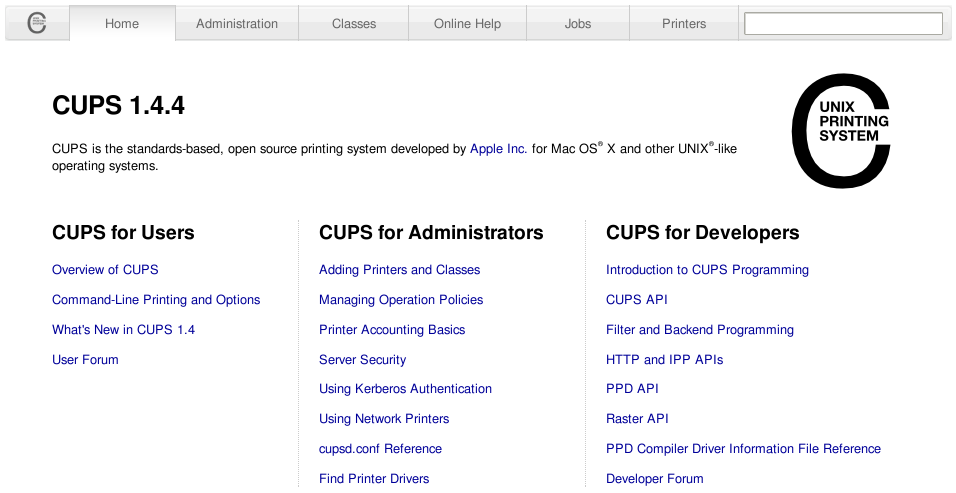
Recent releases of Slackware use CUPS to setup and monitor print jobs. The primary interface to the application is browser based, and the service startup is controlled by /etc/rc.d/rc.cups. With the service running, the tool is accessed from the localhost on port 631 (i.e. http://localhost:631). It can also be used over the network- and in that case it may be better to use https for security. This is the main control window for CUPS, notice several click-able tabs:
.

The latest release of the software has good support for a lot of printers, including the popular HP OfficeJet all-in-one devices.

More about HP all-in-one devices.


In regard to the HP network devices, I have found that you can set the print URL manually using a socket and port 9100. For example, if the printer is located at address 192.168.1.101, then setup CUPS pointing to the URI:
socket://192.168.1.101:9100.

(You can simplify the name if your network is using a local DNS server. On small networks, the address alone is not too big of a hassle.) If you just want to print, the socket URI is a lot easier to enter, rather than HP's own syntax:
hp:/net/Photosmart_C7200_series?ip=192.168.1.101

This is a case where GNU/Linux took a long time to get this right, but now it is working perfectly and is actually easier than comparable setup offered in Windows. I think the latest integrated installer for HP devices is pretty crappy, but YMMV. Earlier Windows drivers refused install under Windows 2000, but that's expired now.

Another nice feature of the all-in-one devices is that the scanning function can be integrated into the Gimp. The only thing necessary is to create a link to the plugin:
$ ln -s /usr/bin/xsane ~/.gimp-2.6/plug-ins
With this linked, there will be new entries on Gimp's "File->Create" menu.

Wednesday, August 11, 2010

En guarde...

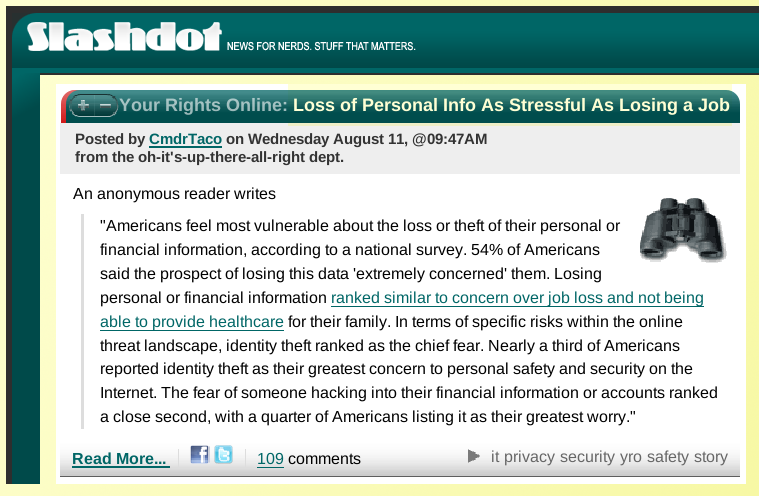
Do you trust your computer to keep your secrets? Your diary and your recipes are one thing, but your bank account numbers (and passwords) are another. So what if you lose a cake recipe, but what happens if your bank account is accessed without your knowledge? At least, some people are starting to realize their potential for loss and the potential downside of blindly trusting their computers:
.

Even though they've noticed, it's not clear that they're prepared to do anything about it. There is no real change in attitude. First of all, they could look for a safer platform to use that would help to minimize the threat. It's as if Ralph Nader were to write an expose calling Windows the Corvair of software, "unsafe at any speed," but his warning goes unheeded because, hey, I like that car...

Thursday, August 5, 2010

GUI setup tools to configure Slackware 13.x's wireless networks

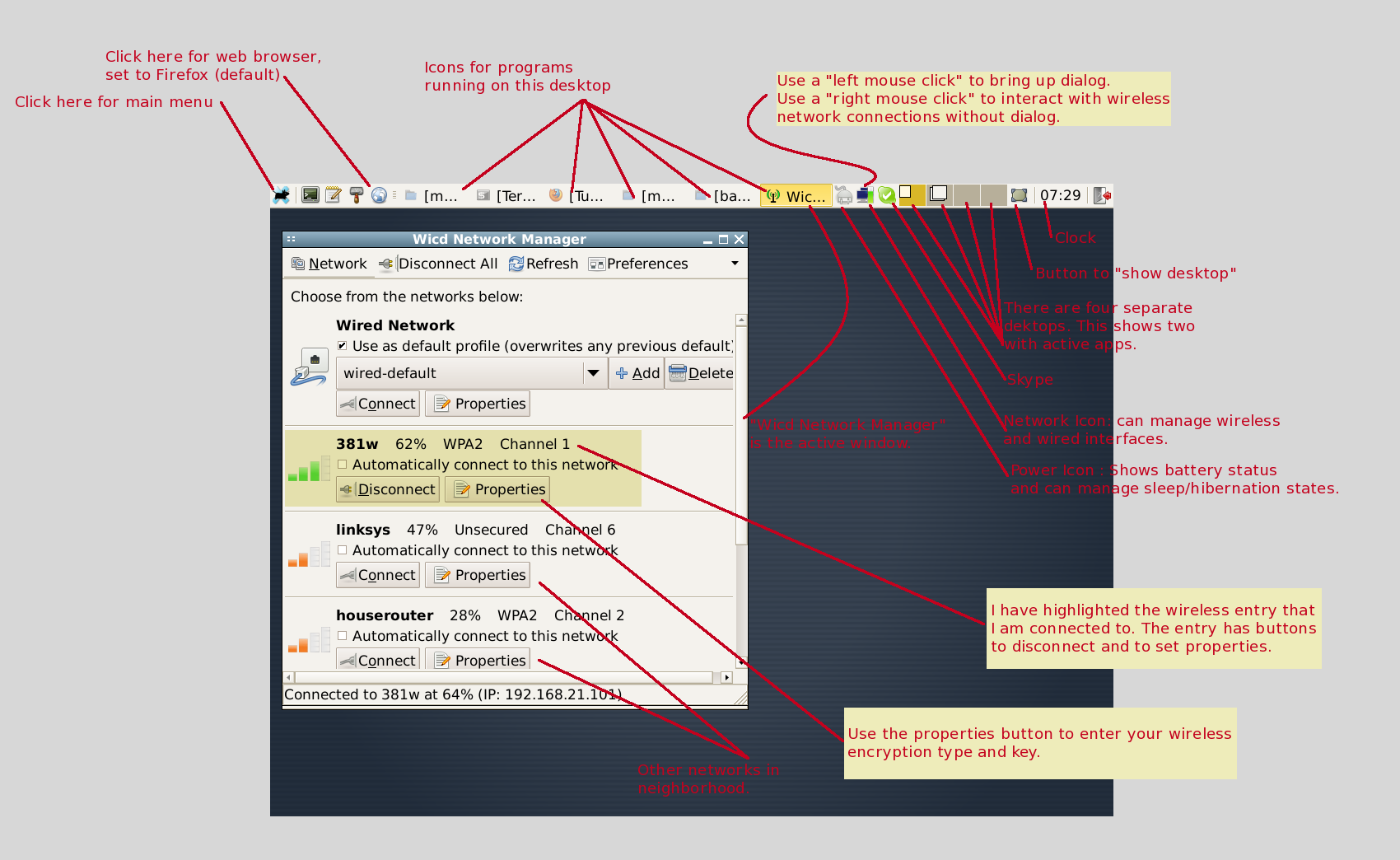
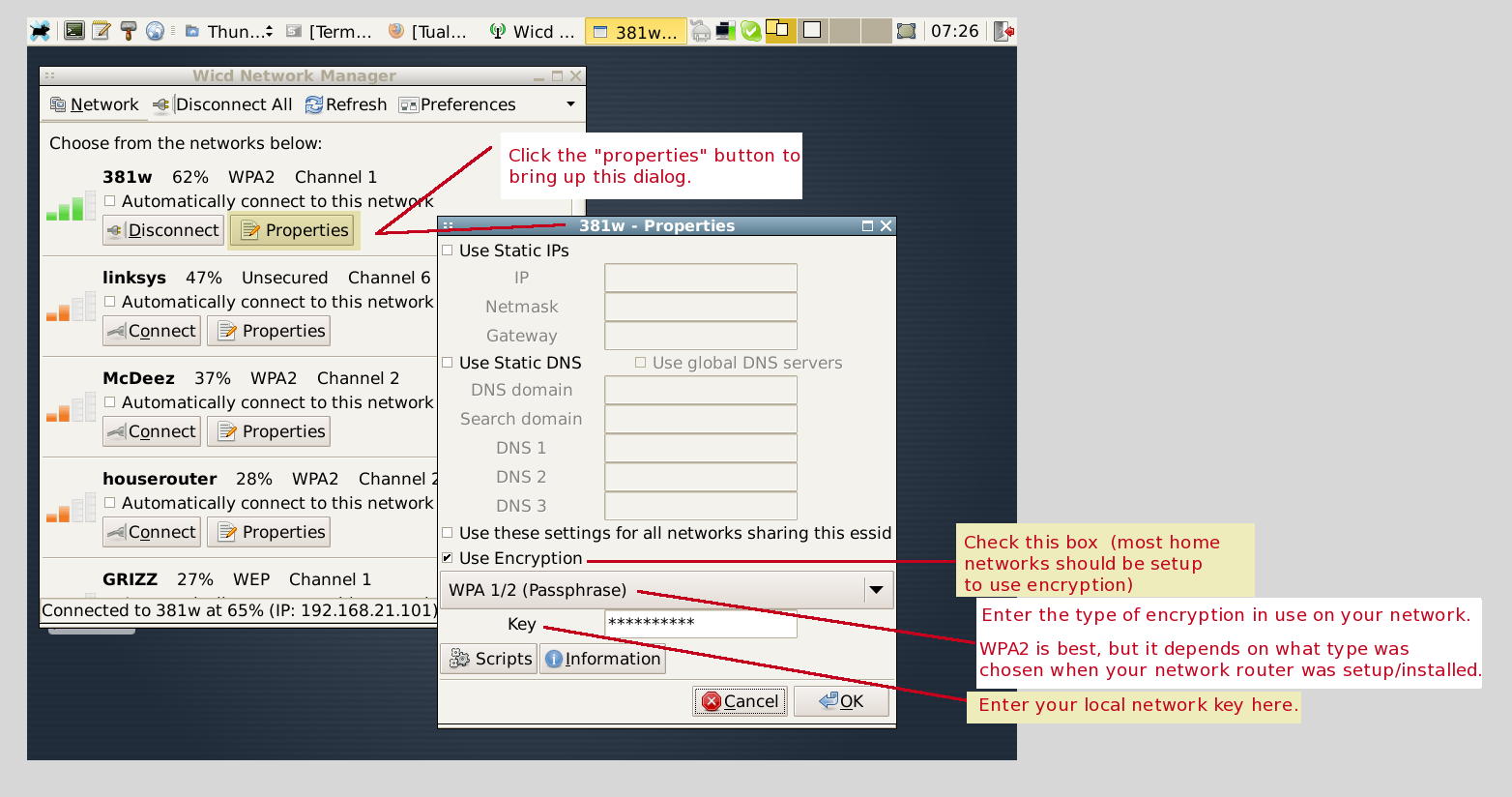
Here are a couple of screenshots which show how to setup wireless networks using the tool, wicd. This tool makes setting network parameters very easy and intuitive; and it does not require using command line tools. The tool/icon offers information about wireless networks in a way that is very similar to the tools available under other operating systems (Windows, Mac OS X, etc.)

.

.

The platform is Slackware 13.x and the window manager is XFCE with very little customization.

Monday, July 12, 2010

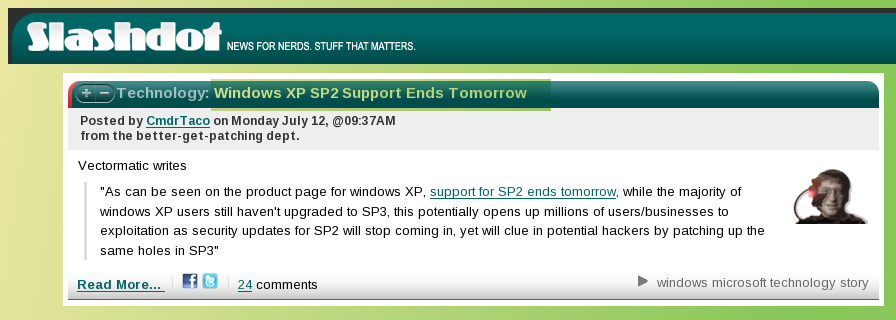
Coming Soon: Last Patches for Windows 2000 and XP SP2

Tomorrow marks the effective "end of life" for Microsoft Windows 2000 and XP SP2. I hope you're ready for it. Also, the same fate will come to XP in toto in just four years (SP3 is its final incarnation). This is notable because Windows 2000 is often used at banks and other institutions. Hopefully, they've been on a fast track program to upgrade. However, that isn't all that likely in this economy and state of computer awareness in management. The truth is XP is so entrenched in business, government, and education, it will require major upgrade programs to be ready to pull the plug by 2014. Perhaps the feds can leverage extra support time for XP, maybe by playing a "monopoly" card. It seems fair, considering that Microsoft has enjoyed a monopoly in personal computer operating systems for the last 25 years. Perhaps, W2k's expiration will cause some alarm bells to start ringing. In the age of budget cuts, schools and government especially should look at ways to get off the monopolist's software, especially when a free alternative exists.

By the way, XP's approximate ten year lifespan is short by other software standards. The feds should have argued for twenty years of support in the antitrust case. Instead, they threw in the towel. I have agured that XP only gained enough maturity for general use at the service pack three level. That gives, in reality, about 7 years of useful life. (Of course, that depends a lot on your definition of the word "useful.")

A lot of users are still on W2k or XP because they wanted to avoid the upgrade treadmill, or because Vista had some big issues with compatibility and stability. It offered a new paint job and some new DRM restrictions - par for the course. It also moved the "furniture" around, as Microsoft is fond of doing. It certainly looks like a lot of fun to shuffle the deck chairs about! Of course, mac's got a lot of milage out of the vista upgrade fiasco. Here is the ad showing the "popularity" of downgrading to XP.

Here is slashdot's headline.

Tuesday, July 6, 2010

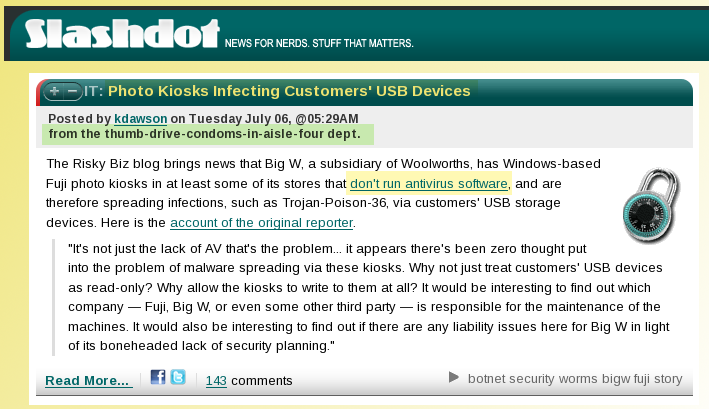
Photo Kiosks Spreads Viruses

It seems the proverbial mother's warning about "catching something" at a public restroom isn't that far off. Just substitute "photo kiosk" for "public restroom" and your computer has potentially caught a nasty Windows virus.

Here is Slashdot's
headline.

The summary raises some interesting questions, especially considering the quantity, ubiquity, and potential damage from Windows viruses. It seems reasonable to assume some protection is in place, especially when the sky is the limit (complete rootkit infection) when dealing with the Windows platform. A rootkit infection is within the realm of possibilities because these devices can be used to boot the system- a simple replay of the floppy disc attack of old. Unfortunately, today's viruses aren't as benign as the music bug virus of old.

Employees Must Wash Hands Before Returning to Work
It is just astounding to me that people expect to be able to "trust" their computers, but don't practice "safe computing." In my opinion, safe computing may require abandoning the Windows platform entirely.

Thursday, June 3, 2010

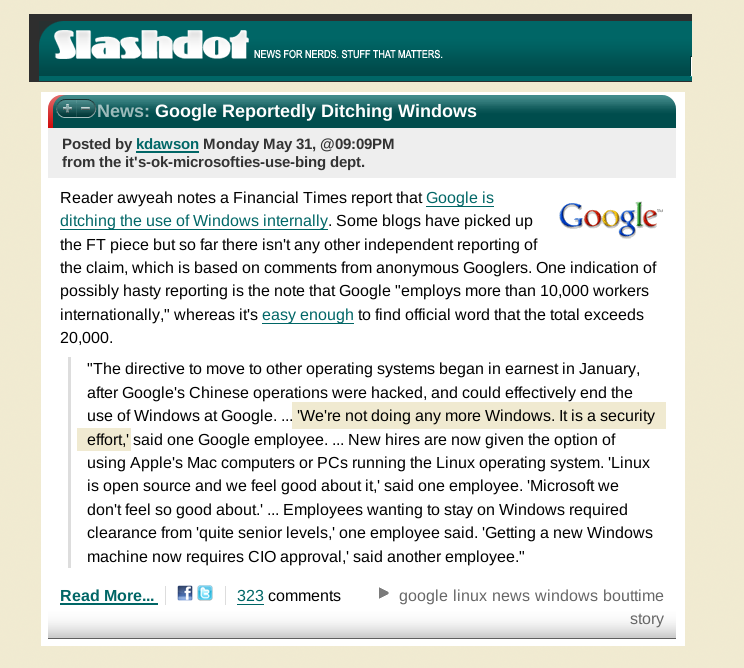
In the news: Google outlaws Windows internally

This story came out earlier this week, and I didn't get around to posting it. Google is switching away from the Windows OS on all internal workstations. This isn't that big of shock because their 500,000+ server operations are already running GNU/Linux; the Android platform is based on a Linux kernel; and Google is poised to release the Chrome OS, a new GNU/Linux based OS. The Chrome OS will be optimized to access cloud-based resources and hopes to make the choice of the OS running locally irrelevant. In any case, the Google decision is good news because it shows that GNU/Linux is ready for prime time on the desktop. That may help reduce the Windows hegemony/monopoly. The reason for Google's descision to switch, according to unnamed internal sources, is the Chinese hack of high-level executives computers earlier this year. That attack, as I understand it, targeted specific individuals, and only succeeded due to use of IE6. Here is Slashdot's headline.


Here are some other very good summaries:

  • Steven J. Vaughan-Nichols

  • Jason Perlow

  • Friday, April 23, 2010

    Who uses GNU/Linux?

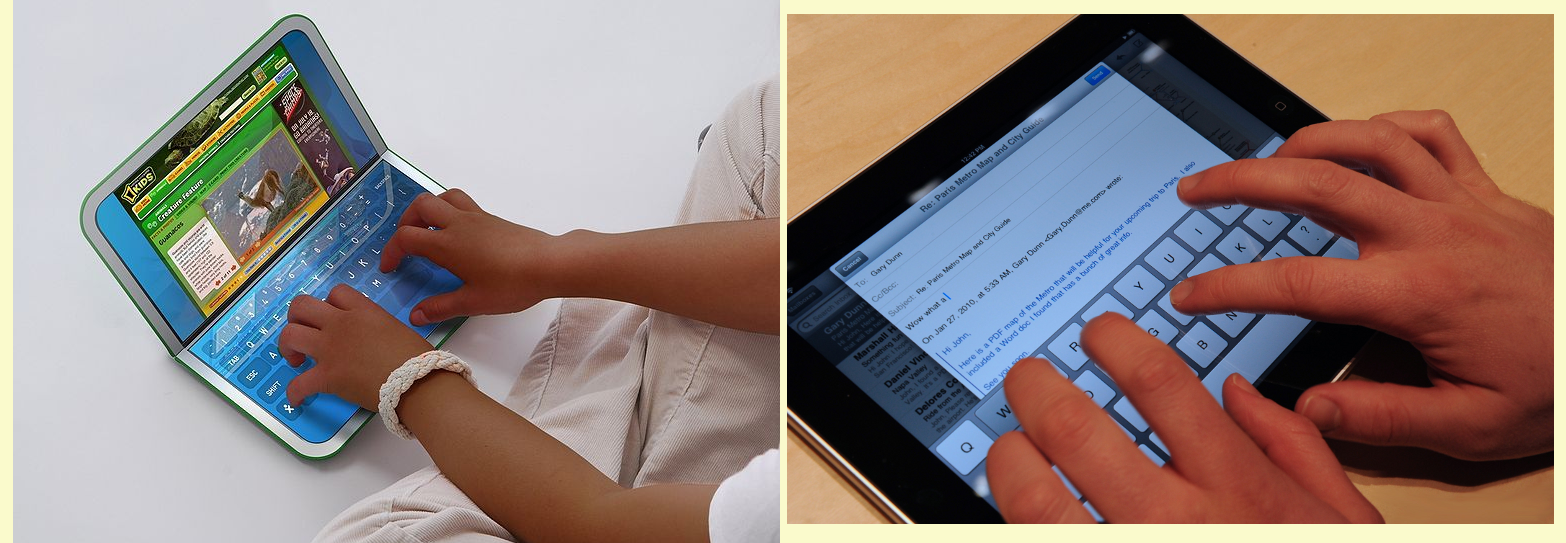
    I noticed this article which lists some high profile Linux users. In this age of layoffs, budget cuts, and "no funding," it's very surprising that the platform is not used/mandated by more governments and schools. The one laptop per child project has rolled out some interesting hardware/software, especially the second generation prototype with dual screens. It looks good, but is not planned for a mass rollout. That's too bad because I would probably buy one. It looks very appealing especially when placed
    side-by-side next to an iPad.


    Update: I am trying to get this idea started here. So far, it is the sound of one hand clapping.


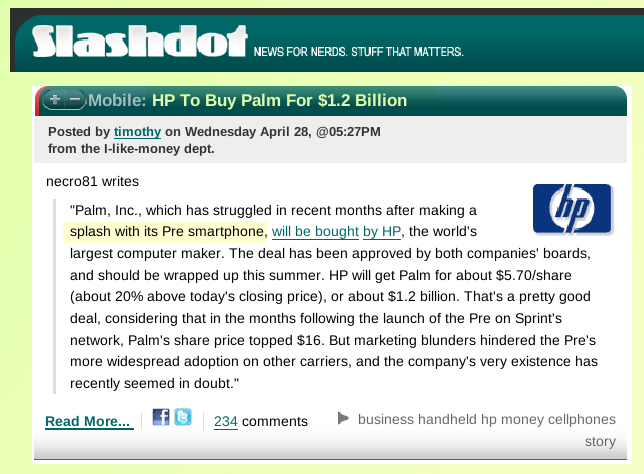
    Second Update: It seems that HP has noticed that Palm could help it extend back into the handheld space. HP will aquire Palm, as noted here.


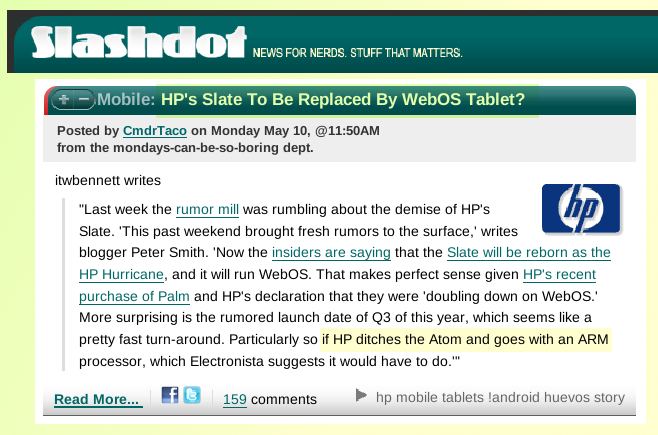
    Third Update: HP may switch Slate to use WebOS.
    here.

    Wednesday, February 3, 2010