Interview with Douglas Trumball, who created special effects for 2001, Silent Running, Close Encounters, The Tree of Life, etc. Download audio.
Showing posts with label movies. Show all posts
Showing posts with label movies. Show all posts
Wednesday, March 7, 2012

Tuesday, May 3, 2011
Recently watched movies
By pure coincidence, I happened to have these two movies in line for viewing:
I didn't know that the latter was almost a shot-for-shot remake of the former when I queued them. It was certainly a case of serendipity, a random alignment of the stars for maximum effect. With that in mind, the two movies are begging for a comparison with one another. Okay, here goes. In the French version, the Depardieu character could have been cast as a cardboard cutout and nothing would have been lost. At least, Liam Neeson in the same role fleshes out the role a bit more. The main roles are for the pair of female characters. Overall, the two movies are mostly on a par with one another in this casting, except Julianne Moore's performance stands out above all. She shows, once again, that she is absolutely fearless. At this point, the Canadian version looks like a worthy remake, even though some of the dialog in the Canadian version is copied verbatim from the French version and the delivery comes off as by rote and stilted at times. The Canadian version includes Hollywood's fetish for Apple computer hardware- nice product placement, I guess. I need something else to make a final comparison of the two movies. The divergence of the scripts will be the difference. The French version of the film is dark; the Canadian version is darker. That seems to give the edge to the Canadian version. However, just when its direction is clear, the script lets up. For whatever reason, the Canadian version spells everything out for us and concludes with a tidy Hollywood ending. Big mistake. I would have liked a more ambiguous ending with more loose ends and more overtones of Greek tradegy. Overall, that is a big weakness that shifts the scale back to the French version. It is a missed opportunity for the remake to improve on the original. As it stands, the French version wins out. YMMV.
p.s. Could it be that the script was altered at the last minute due to Neeson's personal real life tragedy?
- Nathalie, a 2003 French movie directed by Anne Fontaine.
- Chloe, a 2009 Canadian movie directed by Atom Egoyan
I didn't know that the latter was almost a shot-for-shot remake of the former when I queued them. It was certainly a case of serendipity, a random alignment of the stars for maximum effect. With that in mind, the two movies are begging for a comparison with one another. Okay, here goes. In the French version, the Depardieu character could have been cast as a cardboard cutout and nothing would have been lost. At least, Liam Neeson in the same role fleshes out the role a bit more. The main roles are for the pair of female characters. Overall, the two movies are mostly on a par with one another in this casting, except Julianne Moore's performance stands out above all. She shows, once again, that she is absolutely fearless. At this point, the Canadian version looks like a worthy remake, even though some of the dialog in the Canadian version is copied verbatim from the French version and the delivery comes off as by rote and stilted at times. The Canadian version includes Hollywood's fetish for Apple computer hardware- nice product placement, I guess. I need something else to make a final comparison of the two movies. The divergence of the scripts will be the difference. The French version of the film is dark; the Canadian version is darker. That seems to give the edge to the Canadian version. However, just when its direction is clear, the script lets up. For whatever reason, the Canadian version spells everything out for us and concludes with a tidy Hollywood ending. Big mistake. I would have liked a more ambiguous ending with more loose ends and more overtones of Greek tradegy. Overall, that is a big weakness that shifts the scale back to the French version. It is a missed opportunity for the remake to improve on the original. As it stands, the French version wins out. YMMV.
p.s. Could it be that the script was altered at the last minute due to Neeson's personal real life tragedy?
Monday, May 2, 2011
Propublica wins Pulitzer for Magnetar Reporting
Check out today's Fresh Air. A question came up which involved the term, insurable interest. The question wondered whether the entire meltdown could be attributed to a lack of an insurable interest by those using the Magnetar stategy. I think the guests' answer was that they placed more of the blame on those selling insurance (AIG), than those buying it. The insurers had "whiffed" (seriously underestimated risk) at setting the prices for those wanting to buy insurance for CDOs. If a proper price had been set, then Magnetar couldn't have been using that strategy, at least not profitably. Listen for the big finish of the broadcast, broadway style!
The interview audio is cached here:
1.
2.
3.
Here is my blog entry from last April which has a link back to This American Life.
Update: 2011-05-03
I have been meaning to write something about the documentary Inside Job. It is definitely recommended for anyone who wants to know more about the recent economic meltdown. The facts roll out pretty quickly, and it's a lot to digest in one sitting. It's probably best to take it in in smaller bites. That strategy also helps stop you from getting so mad that you start throwing things and/or breaking up the furniture. Anyway you slice it, the movie doesn't paint a pretty picture of how we got here to this current state of affairs. We were led by the "so called" free marketeers that demanded deregulation. That movement caught its stride in the mid 1990s with deregulation bills signed by Clinton that rolled back some of the major safeguards put in place after the 1930's depression. In this new era, governments all around the world were working hard to outdo one another, by easing banking rules and deregulating complex financial instruments. They were aided by the economists they had in their back pocket (Greenspan, Summers, et. al). At first, Greenspan tried to halt the irrational exuberance in the market. Eventually, he relented and decided to go along with the rising tide. With Greenspan on board, no one else of consequence was willing to call the bubble a bubble. Everyone now had been given rose colored glasses. They were working with one main fundamental assumption: the future trend is always positive- prices only go up. That assumption works; that is, until it doesn't. Oops! When the trend reversed, even in the slightest degree (as documented by the Propublica reporting), insolvency rapidly entered the picture. The banks were effectively wiped out over night. They went to Congress and to the Fed and asked for super massive bailouts. I have a hard time with this because these "free marketeers" had convinced me. I'm okay with having a free market, as long as everyone knows the rules are the same for everyone all of the time. Please, note it was the bankers that have turned against the rules of the free market. They did so after looking at their balance sheets. They changed their mind for simple self-preservation. They'd do anything, including reversing course, if it meant avoiding their demise. They needed the bailouts to survive. It's much like a 6 year old changing the rules in the middle of a boardgame, just because they are losing. We, as the adults in the room, felt bad for them, and were coerced into changing the rules for them. Little did we know that the frequent rule changes are a violation of the fudamental rules of the game, a perversion of how capitalism is supposed to work. The changes allowed the banks to socialize their losses. They just hope we will forget that they were all too happy to ride the wave at the other end of the spectrum; that is, they were definitely in favor of privatizing their profits when times were good. Now, it's just too bad, since we didn't hold their feet to the fire when we had the chance. I have to wonder, where was the public outcry that should've demanded that deregulation (as adopted) be enforced. Those rules demanded that everyone else must "stay out" and the game be played to its conclusion. Fairness demands that the rules be the same in both good times and in bad times. The system as it is now is a far cry from Adam Smith's invisible hand. It's more like a giant visible hand that jumps in at the last minute to prop up losers that should've been written off much earlier. Again, too bad for us. Good luck paying off the multi-trillion dollar debts!
An interesting part of the movie is the interviews with economists who led the charge for deregulation. Most have now retreated back to academia, and without exception, they have all landed on their feet. Still, these "great minds" don't come across as particularly intelligent. Two extremely dopey examples still stand out in mind, and even after several months have gone by since seeing the movie: Martin Feldstein (Harvard) and Glenn Hubbard (Columbia). As dumb as they come across, it's amazing that they can be hired anywhere, let alone those prestigious universities. To add insult to injury, wikipedia claims Feldstein is still a perennial candidate for the Nobel prize. Simply amazing! Another irony is that of those interviewed, Elliot Spitzer comes across as one of the most sane voices in the room.
This movie won the Oscar for best documentary of the year. In my opinion, it could have been the best movie of last year. It is the best of those that I have managed to see so far.
Note: There were a few textual changes in today's post. It took a few tries to get what I wanted to say in the proper syntax.
The interview audio is cached here:
1.
2.
3.
Here is my blog entry from last April which has a link back to This American Life.
Update: 2011-05-03
I have been meaning to write something about the documentary Inside Job. It is definitely recommended for anyone who wants to know more about the recent economic meltdown. The facts roll out pretty quickly, and it's a lot to digest in one sitting. It's probably best to take it in in smaller bites. That strategy also helps stop you from getting so mad that you start throwing things and/or breaking up the furniture. Anyway you slice it, the movie doesn't paint a pretty picture of how we got here to this current state of affairs. We were led by the "so called" free marketeers that demanded deregulation. That movement caught its stride in the mid 1990s with deregulation bills signed by Clinton that rolled back some of the major safeguards put in place after the 1930's depression. In this new era, governments all around the world were working hard to outdo one another, by easing banking rules and deregulating complex financial instruments. They were aided by the economists they had in their back pocket (Greenspan, Summers, et. al). At first, Greenspan tried to halt the irrational exuberance in the market. Eventually, he relented and decided to go along with the rising tide. With Greenspan on board, no one else of consequence was willing to call the bubble a bubble. Everyone now had been given rose colored glasses. They were working with one main fundamental assumption: the future trend is always positive- prices only go up. That assumption works; that is, until it doesn't. Oops! When the trend reversed, even in the slightest degree (as documented by the Propublica reporting), insolvency rapidly entered the picture. The banks were effectively wiped out over night. They went to Congress and to the Fed and asked for super massive bailouts. I have a hard time with this because these "free marketeers" had convinced me. I'm okay with having a free market, as long as everyone knows the rules are the same for everyone all of the time. Please, note it was the bankers that have turned against the rules of the free market. They did so after looking at their balance sheets. They changed their mind for simple self-preservation. They'd do anything, including reversing course, if it meant avoiding their demise. They needed the bailouts to survive. It's much like a 6 year old changing the rules in the middle of a boardgame, just because they are losing. We, as the adults in the room, felt bad for them, and were coerced into changing the rules for them. Little did we know that the frequent rule changes are a violation of the fudamental rules of the game, a perversion of how capitalism is supposed to work. The changes allowed the banks to socialize their losses. They just hope we will forget that they were all too happy to ride the wave at the other end of the spectrum; that is, they were definitely in favor of privatizing their profits when times were good. Now, it's just too bad, since we didn't hold their feet to the fire when we had the chance. I have to wonder, where was the public outcry that should've demanded that deregulation (as adopted) be enforced. Those rules demanded that everyone else must "stay out" and the game be played to its conclusion. Fairness demands that the rules be the same in both good times and in bad times. The system as it is now is a far cry from Adam Smith's invisible hand. It's more like a giant visible hand that jumps in at the last minute to prop up losers that should've been written off much earlier. Again, too bad for us. Good luck paying off the multi-trillion dollar debts!
An interesting part of the movie is the interviews with economists who led the charge for deregulation. Most have now retreated back to academia, and without exception, they have all landed on their feet. Still, these "great minds" don't come across as particularly intelligent. Two extremely dopey examples still stand out in mind, and even after several months have gone by since seeing the movie: Martin Feldstein (Harvard) and Glenn Hubbard (Columbia). As dumb as they come across, it's amazing that they can be hired anywhere, let alone those prestigious universities. To add insult to injury, wikipedia claims Feldstein is still a perennial candidate for the Nobel prize. Simply amazing! Another irony is that of those interviewed, Elliot Spitzer comes across as one of the most sane voices in the room.
This movie won the Oscar for best documentary of the year. In my opinion, it could have been the best movie of last year. It is the best of those that I have managed to see so far.
Note: There were a few textual changes in today's post. It took a few tries to get what I wanted to say in the proper syntax.
Sunday, May 1, 2011
Recently watched movies
Aguirre: The Wrath of God.
This is a film from Herzog's early career. Here is the setting. The time is the 1500's; the place is the east slope of the Andes falling into the Amazon basin; the characters are the Spanish conquistadors; and the story is a fictionalized account of a trek into the wild Amazon jungle seeking to find riches at the lost city of gold, El Dorado. The story is modeled after Heart of Darkness. Coppola did his own version of Heart of Darkness, Apocalypse Now about seven years later. He included several homage scenes to Aguirre. There is one area of sharp contrast between the two movies, and that is their budgets. Apocalyse cost 100 times more to make than Aguirre. Both are definitely recommended!
Several of the filmed sequences in the movie seem very dangerous. Here are two examples. First, the opening sequence where they're hiking down a steep trail, and the vantage point of the camera is somehow backed off enough to show the 60 degree (or steeper?) slope. That is compounded by carrying cannons and carrying sedan chairs- just fraught with danger. Jessica and Jon recently hiked the Incan trail- maybe they can add their perspective. That first scene is immediately followed by the rafting scenes through raging rapids with rafts made from 5" trees lashed together. That looked like the actors were in real, not potential, danger. I have to say, that the costumes stayed remarkably clean throughout the filming. I wonder how that was accomplished. Staying so clean appeared a bit incongruous with how "out of their element" the invaders were, as if they were untouched by the wilderness.
Here are few screenshots:
 .
.
The finale shows Aguirre (Kinski) standing alone. In my mind, this was an echo of the last man standing, like Hitler continuing to plan the continuing glories of the Third Reich even though Berlin has been destroyed around him. There is also an appropriate quote from Hugo's Les Miserables about following Ceasar, Charlamagne, and Napoleon for glory, but end up losing everything instead. I think it applies here as well- I may look for it later.
Here is Roger Ebert's review.
Trailer
This is a film from Herzog's early career. Here is the setting. The time is the 1500's; the place is the east slope of the Andes falling into the Amazon basin; the characters are the Spanish conquistadors; and the story is a fictionalized account of a trek into the wild Amazon jungle seeking to find riches at the lost city of gold, El Dorado. The story is modeled after Heart of Darkness. Coppola did his own version of Heart of Darkness, Apocalypse Now about seven years later. He included several homage scenes to Aguirre. There is one area of sharp contrast between the two movies, and that is their budgets. Apocalyse cost 100 times more to make than Aguirre. Both are definitely recommended!
Several of the filmed sequences in the movie seem very dangerous. Here are two examples. First, the opening sequence where they're hiking down a steep trail, and the vantage point of the camera is somehow backed off enough to show the 60 degree (or steeper?) slope. That is compounded by carrying cannons and carrying sedan chairs- just fraught with danger. Jessica and Jon recently hiked the Incan trail- maybe they can add their perspective. That first scene is immediately followed by the rafting scenes through raging rapids with rafts made from 5" trees lashed together. That looked like the actors were in real, not potential, danger. I have to say, that the costumes stayed remarkably clean throughout the filming. I wonder how that was accomplished. Staying so clean appeared a bit incongruous with how "out of their element" the invaders were, as if they were untouched by the wilderness.
Here are few screenshots:
.The finale shows Aguirre (Kinski) standing alone. In my mind, this was an echo of the last man standing, like Hitler continuing to plan the continuing glories of the Third Reich even though Berlin has been destroyed around him. There is also an appropriate quote from Hugo's Les Miserables about following Ceasar, Charlamagne, and Napoleon for glory, but end up losing everything instead. I think it applies here as well- I may look for it later.
Here is Roger Ebert's review.
Trailer
Saturday, April 23, 2011
AI
This winter's Jeopardy match between Rutter, Jennings, and Watson is more evidence we are at the threshold of a new world where computers will take an even larger role. We've come a long way from the Eliza bot. I suspect this trend will continue, with the Jeopardy victory spurring along the next phase of development. I see the next phase moving AI entities, like Watson, onto the internet. The entities will be "powered" using spare compute cycles that are provided by overcapacity at data centers. These spare cycles will become cheaper and cheaper as more massive data centers come online and as Moore's Law continues to deliver more and more performance per watt. This overcapacity will allow the "bots" to "live off the fat-of-the-land."
I think the next phase of development will exist as internal computer structures first. This avoids solving problems in a different solution space (i.e. navigating physical reality.) For sure, there is demand for marrying the two (AI + robotics). Our collective imagination has already been primed by characters like Frankenstein (in literature), and from the first scifi film from 1927. "False Maria" from the film (Metropolis)
 .
.
set the stage for derivative characters like Jude Law's Gigilo Joe in AI. The Jeopardy match would have been more satisfying if Watson could've appeared on the set as a self-contained entity, instead of as a screen connected to a room full of computers. The requirement to read and interpret the physical world means that type of character is a bit farther off, but the pure artificially intelligent character, such as the HAL 9000 is on the doorstep now. We'll have to wait just a bit longer for Moore's Law to catch up with our expectations for the full simulation.
I was thinking about this because I rewatched Catfish this week. That movie makes you start to question what is real and what really constitutes a relationship. It's only one step further along if the human element is removed entirely. In the future you may not know if your "friends" on Facebook are just super-enhanced "Eliza" bots. Be on your toes out there!
 .
.
Here are some more notable AI characters off the top of my head:
p.s. I just remembered that this week is a red-letter date in scifi history. Skynet became self aware on April 21, 2011. Something happened a "microsecond" later.
I think the next phase of development will exist as internal computer structures first. This avoids solving problems in a different solution space (i.e. navigating physical reality.) For sure, there is demand for marrying the two (AI + robotics). Our collective imagination has already been primed by characters like Frankenstein (in literature), and from the first scifi film from 1927. "False Maria" from the film (Metropolis)
 .
.set the stage for derivative characters like Jude Law's Gigilo Joe in AI. The Jeopardy match would have been more satisfying if Watson could've appeared on the set as a self-contained entity, instead of as a screen connected to a room full of computers. The requirement to read and interpret the physical world means that type of character is a bit farther off, but the pure artificially intelligent character, such as the HAL 9000 is on the doorstep now. We'll have to wait just a bit longer for Moore's Law to catch up with our expectations for the full simulation.
I was thinking about this because I rewatched Catfish this week. That movie makes you start to question what is real and what really constitutes a relationship. It's only one step further along if the human element is removed entirely. In the future you may not know if your "friends" on Facebook are just super-enhanced "Eliza" bots. Be on your toes out there!
.Here are some more notable AI characters off the top of my head:
- CDS-101 in The Terminator
- Anna Kalmann in Johnny Mnemonic
- Minuet in Star Trek, TNG. Obviously, Data, too.
p.s. I just remembered that this week is a red-letter date in scifi history. Skynet became self aware on April 21, 2011. Something happened a "microsecond" later.
Recently watched movies
First viewing:
The Kids are All Right
Black Swan
The Station Agent
I would've favored Bening over Portman for the Oscar. I haven't seen Kidman in Rabbit Hole. The academy favors roles which require a lot of body modification (al-a Brody in The Pianist) and Portman certainly did that. Bening's performance rivaled what she did in American Beauty, and probably Julianne Moore should've been nominated, too.
Thomas McCarthy's Station Agent is an understated character study. Each character has their own vulnerabilities; some are just closer to the surface or more visible than others. The movie seems to fit along side Garden State, maybe partly because of the similar New Jersey settings. I want to watch more of the director's work. The Visitor is next on my list, along with more of The Wire.
p.s. If you want to see Herzog's documentary, God's Angry Man, then do it soon. Google says that the video is going to be taken offline.
Update: 2011-04-25
First viewing:
The Visitor
For Your Consideration
The Cook The Thief His Wife & Her Lover This was a bit one-dimensional (at least on its surface) for a critically acclaimed movie. The vivid separate colors of each room and the street outside hint of some symbolism just beyond my comprehension. The outside street is black or dark blue; it is home to the most vile acts, is home to the constantly circling dogs, and is populated by a fleet of trucks containing rotting meat. Probably, I don't know enough Dante for the allusion to resonate fully; still, a pretty hellish depiction. The Nyman score was terrific and gives the movie an operatic quality; the music was the best part for me. Great camera work and set designs. The "cutaway" technique that allows the camera to transcend walls has been widely copied (probably, done best most recently by Spielberg in Minority Report.) For me, the story is the weak point. We get it...the thief is not a good guy. We are just waiting for how he will get it in the end. Here is Ebert's review for more.
The Kids are All Right
Black Swan
The Station Agent
I would've favored Bening over Portman for the Oscar. I haven't seen Kidman in Rabbit Hole. The academy favors roles which require a lot of body modification (al-a Brody in The Pianist) and Portman certainly did that. Bening's performance rivaled what she did in American Beauty, and probably Julianne Moore should've been nominated, too.
Thomas McCarthy's Station Agent is an understated character study. Each character has their own vulnerabilities; some are just closer to the surface or more visible than others. The movie seems to fit along side Garden State, maybe partly because of the similar New Jersey settings. I want to watch more of the director's work. The Visitor is next on my list, along with more of The Wire.
p.s. If you want to see Herzog's documentary, God's Angry Man, then do it soon. Google says that the video is going to be taken offline.
Update: 2011-04-25
First viewing:
The Visitor
For Your Consideration
The Cook The Thief His Wife & Her Lover This was a bit one-dimensional (at least on its surface) for a critically acclaimed movie. The vivid separate colors of each room and the street outside hint of some symbolism just beyond my comprehension. The outside street is black or dark blue; it is home to the most vile acts, is home to the constantly circling dogs, and is populated by a fleet of trucks containing rotting meat. Probably, I don't know enough Dante for the allusion to resonate fully; still, a pretty hellish depiction. The Nyman score was terrific and gives the movie an operatic quality; the music was the best part for me. Great camera work and set designs. The "cutaway" technique that allows the camera to transcend walls has been widely copied (probably, done best most recently by Spielberg in Minority Report.) For me, the story is the weak point. We get it...the thief is not a good guy. We are just waiting for how he will get it in the end. Here is Ebert's review for more.
Friday, April 15, 2011
Robert Redford on NPR
This morning, Robert Redford was interviewed on Morning Edition about his new movie, The Conspirator. This is a movie about whether Mary Surratt was involved in the Lincoln assassination. Listen to the interview
here.
p.s. PBS' History Detectives explored a similar story in 2003.
here.
p.s. PBS' History Detectives explored a similar story in 2003.
Sunday, April 10, 2011
Werner Herzog and Cormac McCarthy on NPR
This week's Science Friday included the segment, Connecting Science and Art. The guests (Werner Herzog, Cormac McCarthy) showed more than casual knowledge in subjects one might consider outside of their normal domains. It was an interesting show, and worth a listen, but Herzog is definitely a fatalist.
p.s. I haven't read or seen McCarthy's work, but Herzog's film work is among the best. He was there on Science Friday to talk mostly about his new documentary:
Cave of Forgotten Dreams.
His other films that should be checked out include:
Documentaries:
Update: 2011-04-20
Terry Gross interviewed Werner Herzog today about the movie, Cave of Forgotten Dreams. The audio is cached here:
1.
2.
3.
Update: 2011-05-01
In the above interview, Terry Gross kept mentioning Aguirre: The Wrath of God. I didn't read anything more about it before getting a copy on Netflix. In the back of my mind, I was supposing it to be another "God's Angry Man." Needless to say, it is Herzog's Heart of Darkness. I have a new blog entry about it here.
Update: 2011-05-09
Film critic Kenneth Turan reviewed Cave of Forgotten Dreams here. (mp3)
p.s. I haven't read or seen McCarthy's work, but Herzog's film work is among the best. He was there on Science Friday to talk mostly about his new documentary:
Cave of Forgotten Dreams.
His other films that should be checked out include:
- Fitzcarraldo, don't miss it!
- Rescue Dawn
Documentaries:
- Encounters at the End of the World, Herzog is not very nice/polite when interviewing scientists. Still, the subject matter is interesting and overcomes Herzog's overtly injected point of view. The film would have won best documentary if he had let the material speak for itself a bit more.
- God's Angry Man, about Gene Scott. The video is online.
- Grizzly Man, about Timothy Treadwell.
Update: 2011-04-20
Terry Gross interviewed Werner Herzog today about the movie, Cave of Forgotten Dreams. The audio is cached here:
1.
2.
3.
Update: 2011-05-01
In the above interview, Terry Gross kept mentioning Aguirre: The Wrath of God. I didn't read anything more about it before getting a copy on Netflix. In the back of my mind, I was supposing it to be another "God's Angry Man." Needless to say, it is Herzog's Heart of Darkness. I have a new blog entry about it here.
Update: 2011-05-09
Film critic Kenneth Turan reviewed Cave of Forgotten Dreams here. (mp3)
Monday, March 28, 2011
Recently watched movies
First viewing:
Easy A, clip
Catfish
Lenny, lost out to Godfather II for best picture 1975.
Song of Bernadette, best actress 1944
Get Low
The Kid Stays in the Picture
Ed Wood, Tim Burton directs.
Mademoiselle Chambon
Eyes Wide Shut
A History of Violence, origin from a graphic novel evident.
The Fighter
Rewatched:
The China Syndrome, topical...a definitive role for Lemmon.
Paper Moon...I want my two hundred dollars!
I will probably update this page with more comments...
Update: 2011-04-03
Rewatched:
A Time for Burning The opening scene where Chambers is cutting hair sets the stage. In his opening speech with the preacher, he presents an indictment and vents a lot of pent up frustration. His speech is like a march- every sentence moves forward advancing ideas, point after point. In the end, Chambers has taken so much ground that the preacher has no choice but to retreat, literally out of the door. The movie is about how the preacher regroups and decides to continue to follow his conscience, even though Chambers predictions end up being prophetic. Still relevant for our time.
Easy A, clip
Catfish
Lenny, lost out to Godfather II for best picture 1975.
Song of Bernadette, best actress 1944
Get Low
The Kid Stays in the Picture
Ed Wood, Tim Burton directs.
Mademoiselle Chambon
Eyes Wide Shut
A History of Violence, origin from a graphic novel evident.
The Fighter
Rewatched:
The China Syndrome, topical...a definitive role for Lemmon.
Paper Moon...I want my two hundred dollars!
I will probably update this page with more comments...
Update: 2011-04-03
Rewatched:
A Time for Burning The opening scene where Chambers is cutting hair sets the stage. In his opening speech with the preacher, he presents an indictment and vents a lot of pent up frustration. His speech is like a march- every sentence moves forward advancing ideas, point after point. In the end, Chambers has taken so much ground that the preacher has no choice but to retreat, literally out of the door. The movie is about how the preacher regroups and decides to continue to follow his conscience, even though Chambers predictions end up being prophetic. Still relevant for our time.
Monday, July 12, 2010
It's always interesting to watch movies from earlier eras, just to see how well they hold up over time if nothing else. We just watched the Elia Kazan's 1961 movie Splendor in the Grass. The movie is set in time at the height of the first stock market bubble/bust cycle, 1928-1929. The preacher warns early on,
The audience knows that trouble is ahead for companies that get caught up in the bubble, like "Stamper Oil." Money buys friends and influence- as long as you have it. What looks like a sure thing today, is wiped out tomorrow. It's a good backdrop for the main story about high school sweethearts. The audience knows that 1929 is coming for the Stamper fortune, but will it be the same fate for the young lovers? This film portrays the pressures of this time of life. Their personal choices set the direction for the rest of their lives.
The film is notable because of the personal choices that director Elia Kazan made in his own life. His choice was to name-names during the red scare. That allowed him to continue working in Hollywood, and free to work with "A-list" talent. The flip side choice, to remain silent or to not appear, was not rewarded. A lot of great actors and directors, such as Jules Dassin faced the blacklist and exile. Kazan's choice really casts a pall over his entire body of work. It is especially noticable with the anti-union sentiments that are part of On the Waterfront. That picture suffers a lot more than Splendor in the Grass. Here, the great performances, especially from Natalie Wood, will stand the test of time. It is truly great and overcomes the negative points assigned to Kazan.
 .
.
I don't know how Natalie Wood did not win the best actress oscar for that year. Perhaps, there was a split vote between her and Audrey Hepburn; or perhaps, the audience wasn't ready for a non-happily ever after resolution. Still, this may be the best female performance of the entire 1960's decade. Any other nominations?
Lay not up for yourselves treasures on earth, where moth and rust does corrupt, and where thieves break through and steal:
The audience knows that trouble is ahead for companies that get caught up in the bubble, like "Stamper Oil." Money buys friends and influence- as long as you have it. What looks like a sure thing today, is wiped out tomorrow. It's a good backdrop for the main story about high school sweethearts. The audience knows that 1929 is coming for the Stamper fortune, but will it be the same fate for the young lovers? This film portrays the pressures of this time of life. Their personal choices set the direction for the rest of their lives.
The film is notable because of the personal choices that director Elia Kazan made in his own life. His choice was to name-names during the red scare. That allowed him to continue working in Hollywood, and free to work with "A-list" talent. The flip side choice, to remain silent or to not appear, was not rewarded. A lot of great actors and directors, such as Jules Dassin faced the blacklist and exile. Kazan's choice really casts a pall over his entire body of work. It is especially noticable with the anti-union sentiments that are part of On the Waterfront. That picture suffers a lot more than Splendor in the Grass. Here, the great performances, especially from Natalie Wood, will stand the test of time. It is truly great and overcomes the negative points assigned to Kazan.
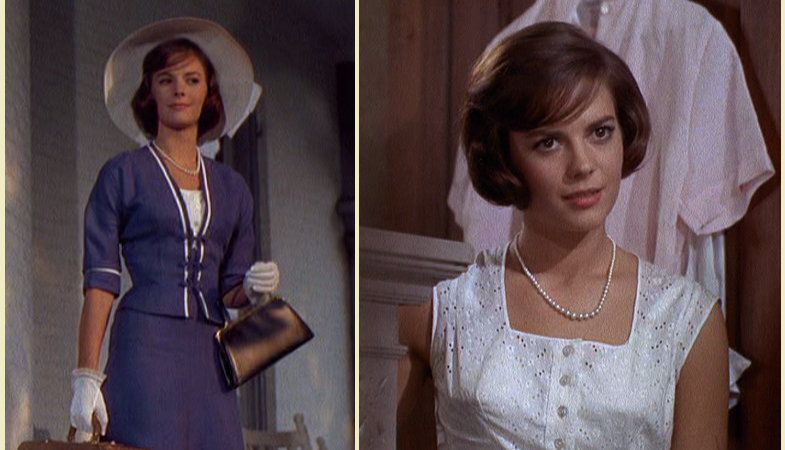 .
.I don't know how Natalie Wood did not win the best actress oscar for that year. Perhaps, there was a split vote between her and Audrey Hepburn; or perhaps, the audience wasn't ready for a non-happily ever after resolution. Still, this may be the best female performance of the entire 1960's decade. Any other nominations?
Subscribe to:
Posts (Atom)